
You sit down to study, open your laptop for lecture slides, pick up your phone to check one class message, and end up bouncing between tabs, notifications, music, flashcards, and three unrelated sites. That's the problem most students are trying to solve. Not “how do I run a timer,” but “what keeps breaking my study session?”
The best focus apps for studying do different jobs. Some help you start when you're procrastinating. Some block the apps and sites you always drift toward. Some turn vague revision plans into concrete sessions. Others add accountability, or create an audio environment that makes deep reading less effortful. If you pick the wrong category, even a good app feels useless.
That's also why simple phone blocking often isn't enough. Students rarely get distracted on one device only. Recent education-focused analysis points to multitasking, social media, and cognitive overload as key drivers of digital distraction in study settings, which is why stronger cross-device controls and task structure matter more than a timer alone in many workflows in this university-linked paper on digital distractions in education.
I'd judge any study-focus tool on six things: platform coverage, blocking strength, accountability, planning support, setup friction, and cost transparency. Read the list through that lens and the trade-offs become obvious fast.
Kohru is worth special attention if you want one workflow that covers sessions, task planning, cross-device blocking, and habit support together. It won't be the right pick for every student, but it fits the way a lot of people study now. Phone in hand, laptop open, task list messy, attention split. If writing is one of the things you keep interrupting, this guide to distraction-free writing with RewriteBar is a useful companion read.
Table of Contents
- 1. Kohru
- 2. Forest
- 3. Freedom
- 4. Opal
- 5. Cold Turkey Blocker
- 6. Flipd
- 7. Focus To-Do
- 8. Brain.fm
- 9. Focusmate
- 10. SelfControl (macOS)
- Top 10 Study Focus Apps, Feature Comparison
- Build a Focus Stack You Can Repeat
1. Kohru
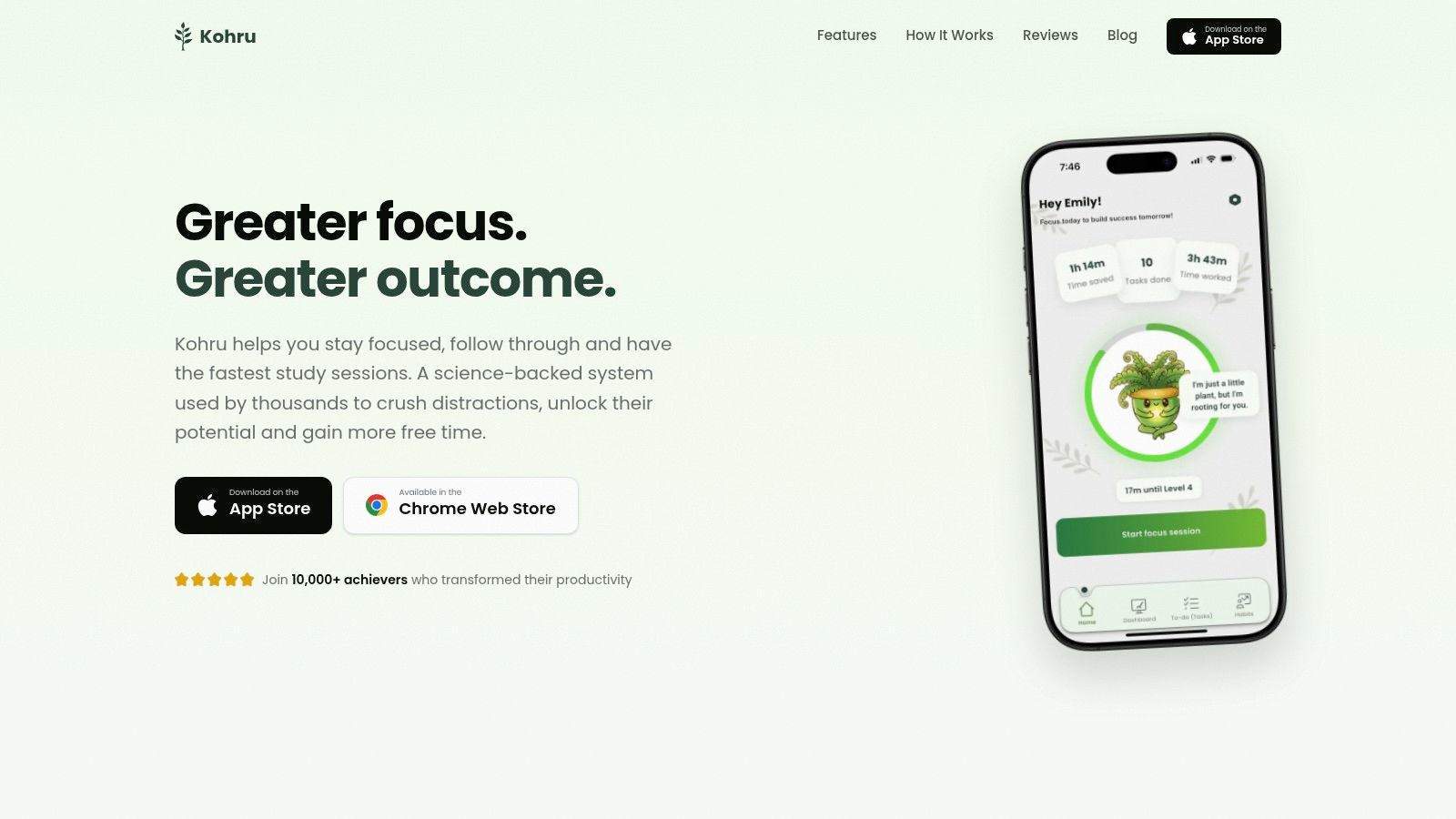
You sit down to study with a vague plan, open your laptop, check your phone once, and lose 20 minutes before work starts. Kohru is built for that failure point. Its job in a study system is broader than blocking. It handles planning, task initiation, session structure, and some accountability in one place.
That makes it a different type of tool from apps that only start a timer or only lock social apps. The earlier research on student screen time and attention supports the basic problem. Students often struggle with more than notifications alone. Kohru's pitch is simple. Pick the task, start the session, and reduce the number of chances to drift before work begins.
Where Kohru fits best
Kohru makes the most sense for students who keep breaking focus at the handoff between deciding and starting. In practice, that usually means the assignment is already known, but the work is not shaped into a session yet. Kohru closes that gap better than a pure blocker.
Its workflow covers several jobs that students often split across separate apps:
- Planning: Smart To-Do Lists separate Work and Personal tasks, which helps if school tasks keep getting buried under life admin.
- Task initiation: A task can turn directly into a focus session, so there is less setup between “I should do this” and “I'm doing it now.”
- Blocking: Focus Sessions aim to cover phone, laptop, and Chrome use, which is more realistic for students who bounce between devices.
- Accountability and habit support: Weekly targets and streak tracking push consistency without making one bad day feel like the whole system collapsed.
- Progress review: The dashboard shows focus time, completed tasks, and streak history in one view.
That combination is the main reason to consider it.
In a real workflow, Kohru works well for students who study in blocks tied to specific outputs: finish two calculus problems, annotate one reading, draft 300 words, review one lecture set. It is less compelling if you already have a task manager you like, a separate blocker you trust, and no interest in consolidating tools.
What it feels like to use
Kohru appears designed to guide behavior without making the app itself feel punishing. You get custom session lengths, difficulty settings, breaks, allowlists, auto-sync, and a one-click override. That last part matters. Strict tools can be effective, but they also fail fast when students resent them and start looking for workarounds.
I'd place Kohru in the middle on enforcement. Strong enough for routine studying. Less suited to students who need near-total lockout because they will override any soft edge the moment discomfort hits.
The trade-offs
The limits are real. Platform coverage is still narrower than the strongest blockers in this list. It is available on iOS, Android is pending, and desktop support depends on a Chrome extension rather than a full desktop app. If you study on a Mac or Windows laptop outside Chrome, that setup may feel partial.
Pricing transparency is also weaker than it should be. If cost matters, and for students it usually does, comparing Kohru against simpler single-purpose apps takes extra effort.
Still, Kohru earns its place because it combines multiple study jobs in one workflow instead of asking you to stitch them together yourself. If your weak point is getting from messy task list to actual focused work, that integration is useful. You can check the product at Kohru.
2. Forest
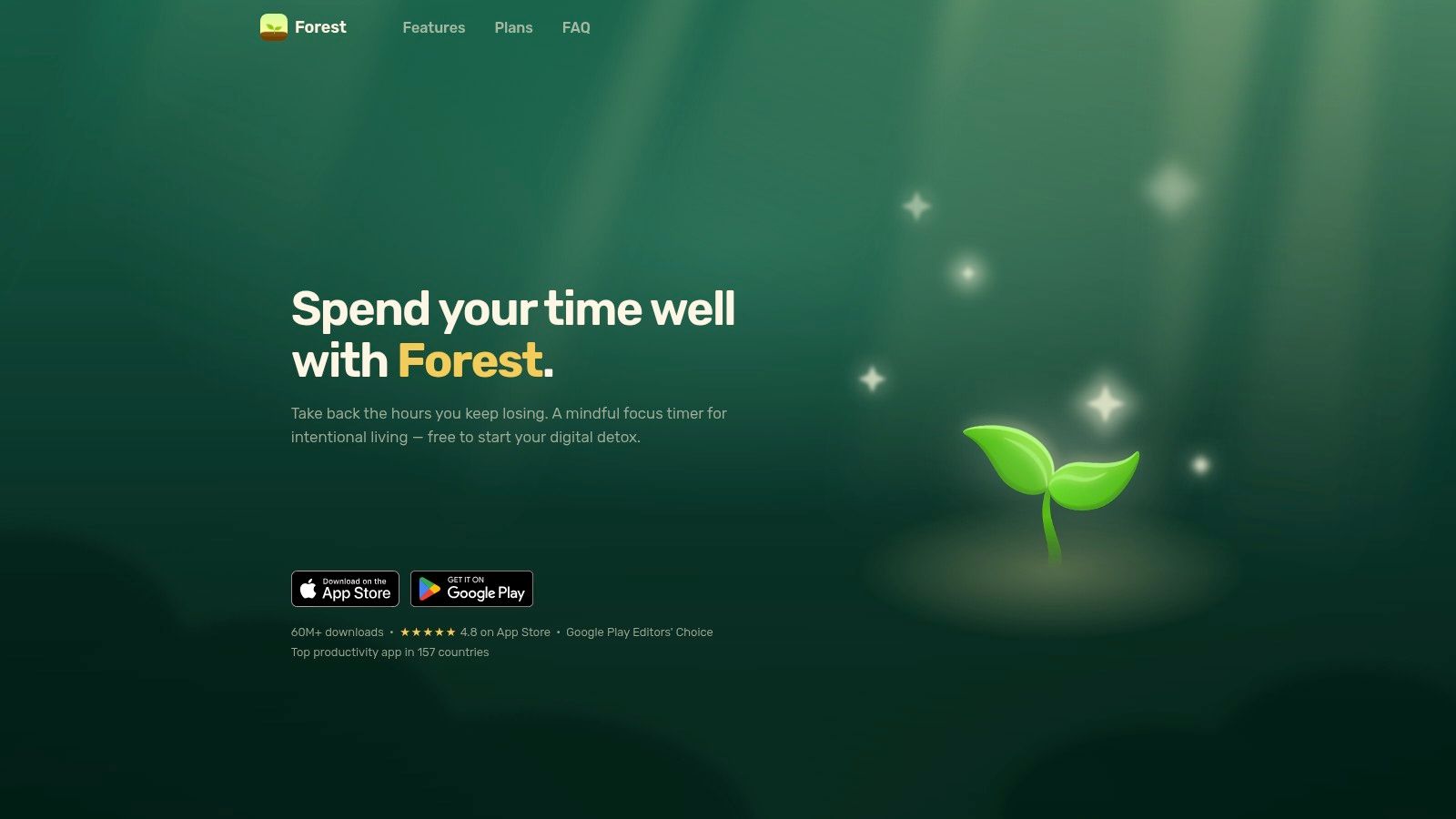
Forest is for students who respond better to gentle motivation than hard enforcement. If a harsh lockout makes you rebel against your own system, the tree-growing mechanic can work surprisingly well. You start a session, leave the phone alone, and watch the result accumulate visually.
That's why Forest tends to work best when the main problem is restlessness, not outright compulsive app switching across every device. It gives you a reason to stay in the session, but it doesn't try to become your entire study operating system.
Best use case
Forest is strongest in short and medium study blocks:
- Pomodoro-style revision: Good for reading sets, problem drills, and flashcard rounds.
- Shared motivation: Co-planting sessions help if you study with classmates remotely.
- Visible consistency: Weekly, monthly, and yearly history make it easy to see whether you're showing up.
It also has optional app allowlist and blocking features on iOS through Apple's Screen Time framework, but that still isn't the same as a heavy-duty system-wide blocker across all contexts.
Forest works when you already want to study and need a light fence around your attention. It works less well when you're in full avoidance mode and looking for ways around your own plan.
The gamification is the selling point and the limit. Some students love the sense of progress and community. Others stop caring once the novelty fades. If that sounds like you, pair Forest with a stricter blocker on your laptop, or use it only for routine daily sessions where friction needs to stay low.
For students who want motivation first and discipline second, Forest is still one of the easiest focus apps for studying to recommend.
3. Freedom
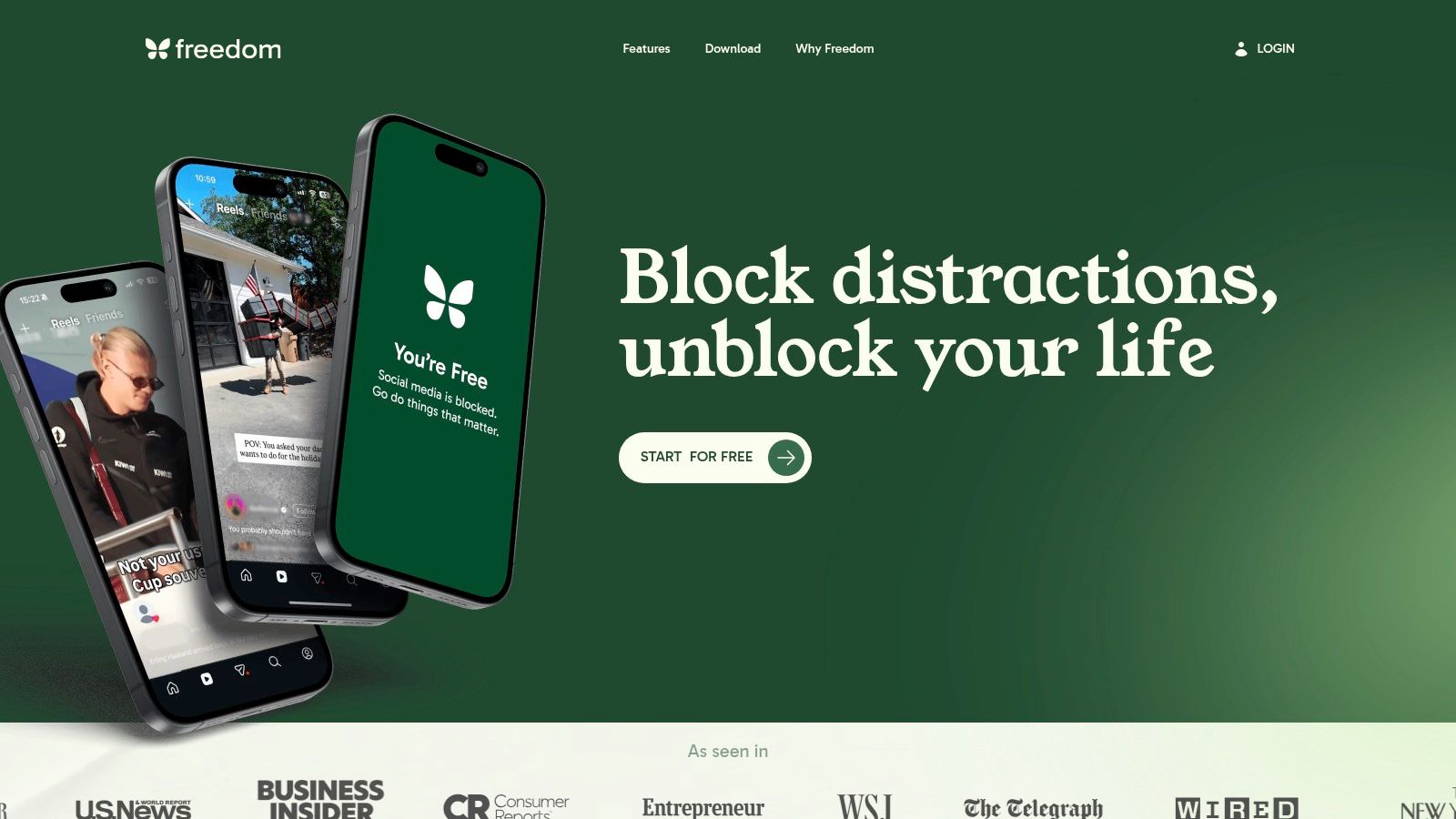
A familiar study failure looks like this: the laptop is blocked, the reading is open, and the phone becomes the backup distraction within minutes. Freedom is built for that exact weak point. Its main job in a study system is cross-device blocking, and it handles that job better than single-platform tools.
That matters more than many students expect. Studying rarely happens on one screen anymore. Notes might be on a laptop, lecture slides on a tablet, group messages on a phone, and the temptation to drift is spread across all of them. Freedom lets you run one session across that whole setup instead of trying to police each device separately.
The app makes the most sense for students who already know their study windows and want enforcement to start on schedule. Set a recurring block for your evening review hour or your Saturday exam prep block, and Freedom removes a lot of the daily negotiation that causes sessions to slip.
A practical setup often looks like this:
- Start with a short blocklist of obvious time sinks, not an exhaustive purge.
- Turn on scheduled sessions for the study periods you keep.
- Use Locked Mode if you have a habit of canceling the block as soon as the work gets difficult.
- Add the built-in audio only if you want background sound inside the same tool.
Freedom does one job well, but it does not cover the full study loop. It will block Instagram, YouTube, or specific apps across devices. It will not decide whether you should review biology notes, write the first paragraph of an essay, or finish a problem set. Students who struggle more with starting than with wandering usually need something else for task initiation or planning. That is where a paired setup makes more sense. Freedom for blocking, then a planner or a tool like Kohru for deciding what to do and getting into the session.
There are trade-offs. Setup takes longer than a timer app, especially if you study across several devices and want the blocklists to be clean. Platform differences also matter. Cross-device support is the reason to choose Freedom, but the exact controls and exceptions are not identical on every operating system.
Freedom is a strong pick if distraction leaks from one device to another and keeps breaking your study blocks. Choose it for enforcement across screens, not for motivation, planning, or accountability.
4. Opal
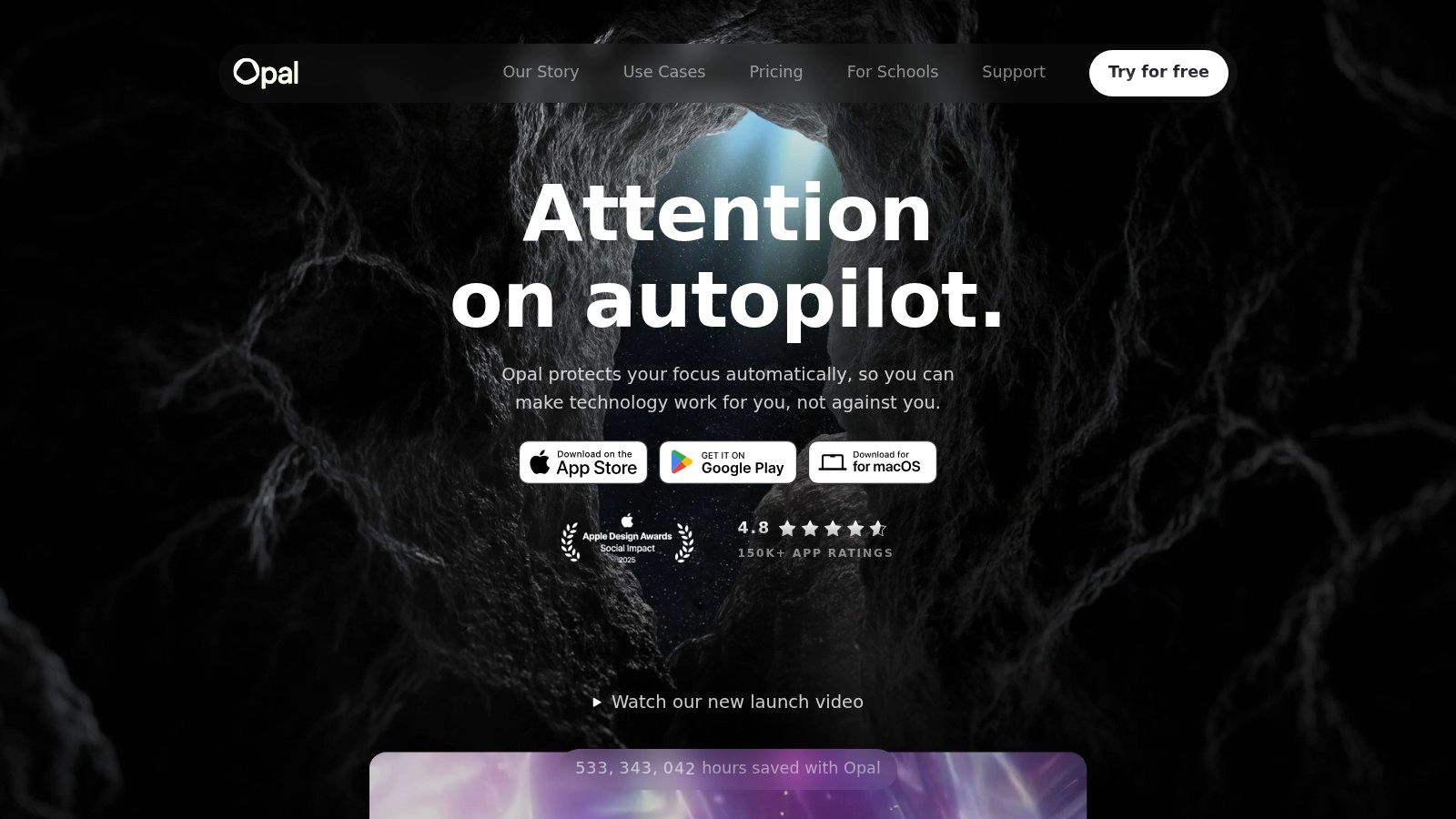
Opal is for students who know they will test the edges of any soft system. If a nudge-based app makes you laugh and tap straight through it, Opal is closer to what you need.
On iPhone, it's one of the stricter mainstream options. Hard Mode and rule-based controls make it better suited to exam periods, deadline weeks, or any stretch where your phone becomes a reliable escape hatch.
Why some students do better with Opal
Opal works best when you want preset rules instead of session-by-session decisions.
- Hard Mode: Reduces the ease of bailing out mid-session.
- Rules and schedules: Useful if your weekday class rhythm differs from your weekend study rhythm.
- Allow-only setups: Strong for students who want a short list of approved apps during revision.
- History and focus scoring: Helpful if visible feedback keeps you honest.
There's a real trade-off here. Strictness helps some people focus. It also makes the app feel oppressive if you only need a light boundary.
Some students perform better when the blocker is stricter than their mood. Others stop using the tool entirely once it feels punitive. The right level of enforcement is personal, not universal.
That's especially relevant for users who don't respond well to shame-heavy systems. If rigid lockouts make you spiral after one bad day, a more flexible app may be a better long-term fit.
For students who want hard limits on mobile distraction and don't mind paying for stronger controls, Opal is one of the better choices.
5. Cold Turkey Blocker
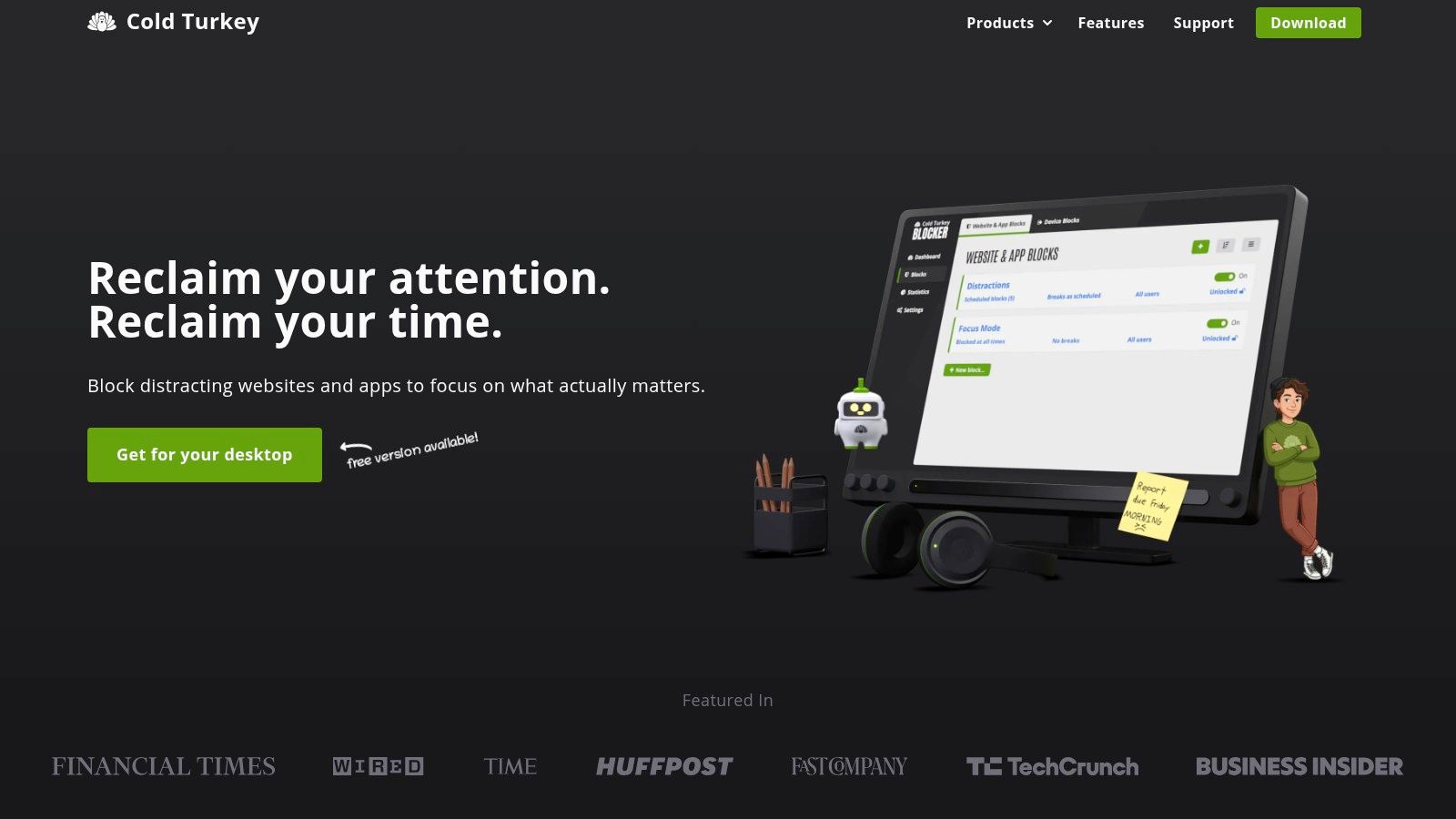
You sit down to write an essay on your laptop, open one article for research, then drift into YouTube, Reddit, Discord, and three tabs you did not mean to open. If that is the failure point in your study system, Cold Turkey Blocker deserves serious attention.
Cold Turkey does one job better than almost anything in this list: desktop blocking with real resistance. It is built for students who break weaker blockers the moment stress rises. If your pattern is "I only need one video break" and 45 minutes disappear, this is the kind of tool that changes the odds.
What stands out in practice is how well it handles computer-based study. You can block websites, desktop apps, and category-level distractions during scheduled work blocks, which matters for students whose procrastination does not stay inside the browser. Game launchers, messaging apps, and news rabbit holes are often the problem. Cold Turkey is one of the few tools here that treats that.
It also asks more of you up front. The first setup is not hard, but it is more deliberate than lighter focus apps. You need to decide what gets blocked, when blocks start, whether breaks are allowed, and how strict you want lockouts to be. Students who like to tune a system will appreciate that. Students who want a one-minute install and instant calm may not.
Cold Turkey makes the most sense in the blocking layer of a study stack:
- Use it if your main study work happens on a Windows or Mac laptop.
- Use it if you bypass softer blockers mid-session.
- Pair it with a phone blocker if your distraction shifts to mobile.
- Skip it if your bigger issue is planning, accountability, or getting started. In those cases, Kohru, Focusmate, or a Pomodoro app may solve the actual bottleneck better.
That last point matters. Cold Turkey is excellent at enforcement, but enforcement is only one job in a study system. It will not plan your revision week, help you choose the next task, or create social accountability. For some students, that is perfect. They already know what to do and just need the laptop locked down. For others, it works better as the wall around a workflow built elsewhere.
The biggest limitation is obvious: no iPhone or Android coverage. If your laptop is under control but your hand reaches for Instagram every ten minutes, Cold Turkey has done its job and your system is still incomplete.
For students whose academic work lives on a computer and whose distractions live there too, Cold Turkey Blocker is one of the strongest blocking tools in the category.
6. Flipd
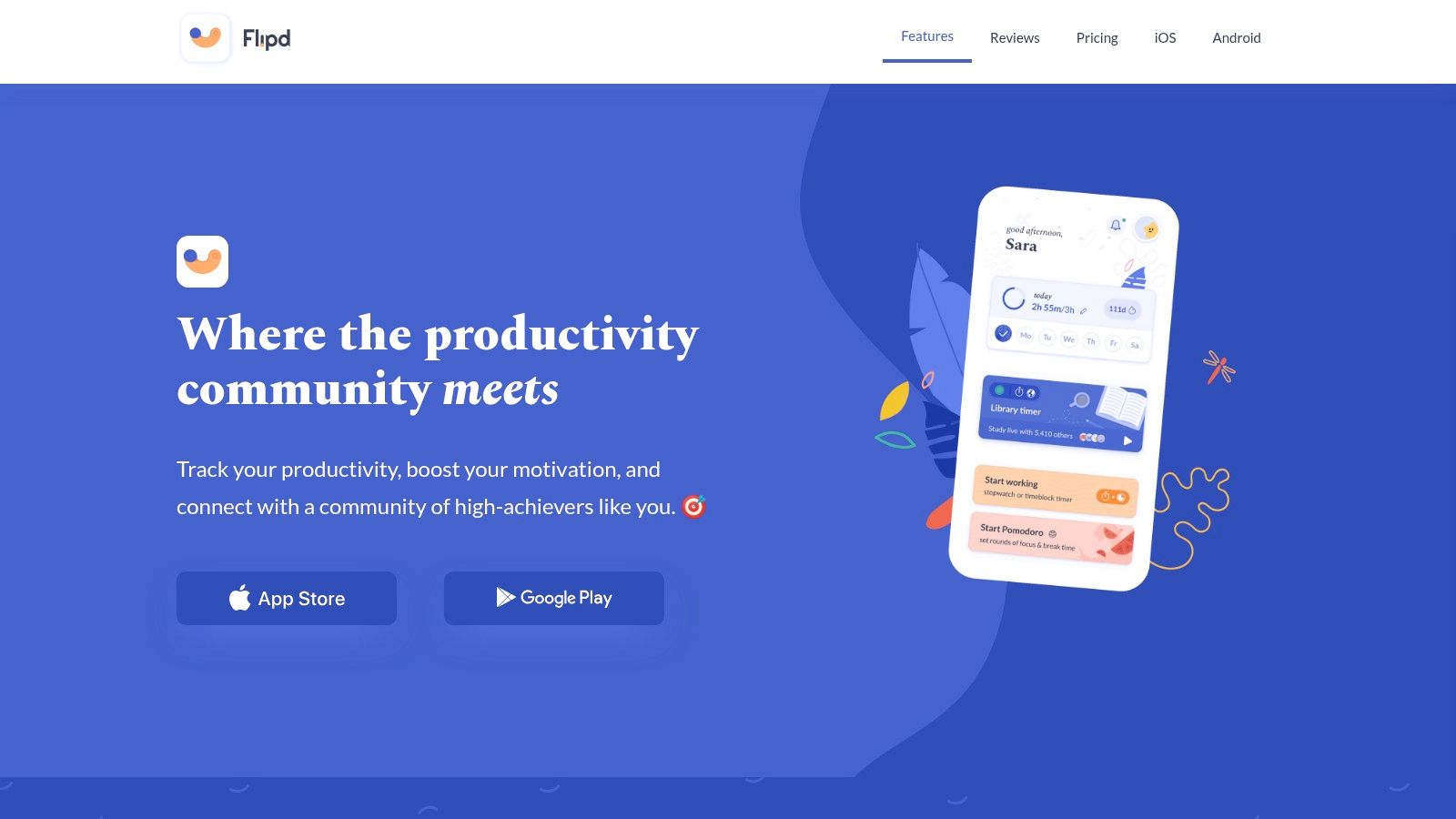
You sit down for a two-hour revision block, start a timer, and then spend half that time drifting between messages, tabs, and low-effort admin. Flipd is built for the student who needs a session container, visible effort, and some social pressure, not a hard lock on every distraction source.
That makes it a specific kind of tool in a study system. Flipd handles accountability and tracking well. It does much less for strict enforcement, and it does almost nothing for planning your week or deciding the next task. If your bottleneck is "I never start" or "I keep studying alone and quitting early," that job fit matters more than the app store category.
The app is most useful once you already know what the session is for. Open it, tag the block as reading, problem sets, or drafting, run the session, and let the history log show what happened across the week. Students who overestimate their focused hours usually benefit from that feedback. Students who need their phone physically or technically locked down usually need another layer.
What Flipd does well in practice:
- Session logging with categories, so study time is not just one undifferentiated total
- History and calendar views that expose inconsistency fast
- Group challenges, events, and leaderboard-style pressure for students who work better when other people are also showing up
- Streaks and milestones that reward repetition, which helps during long exam seasons
The trade-off is simple. Flipd can motivate you to begin and keep count. It is less reliable as the wall that stops you from bailing out of the session. If Instagram, YouTube, or group chats are the problem, Flipd on its own will feel polite.
That is why Flipd often works better in a stack than as a single answer. Pair it with Freedom, Opal, or Cold Turkey if enforcement is weak. Pair it with Kohru or a task-first app if your issue starts earlier, at the "what am I doing for the next 45 minutes?" stage. Flipd then becomes the accountability layer that keeps the system visible.
Skip it if you want aggressive blocking as the main feature. Use Flipd if consistency, study logs, and shared momentum are the missing pieces in your workflow.
7. Focus To-Do
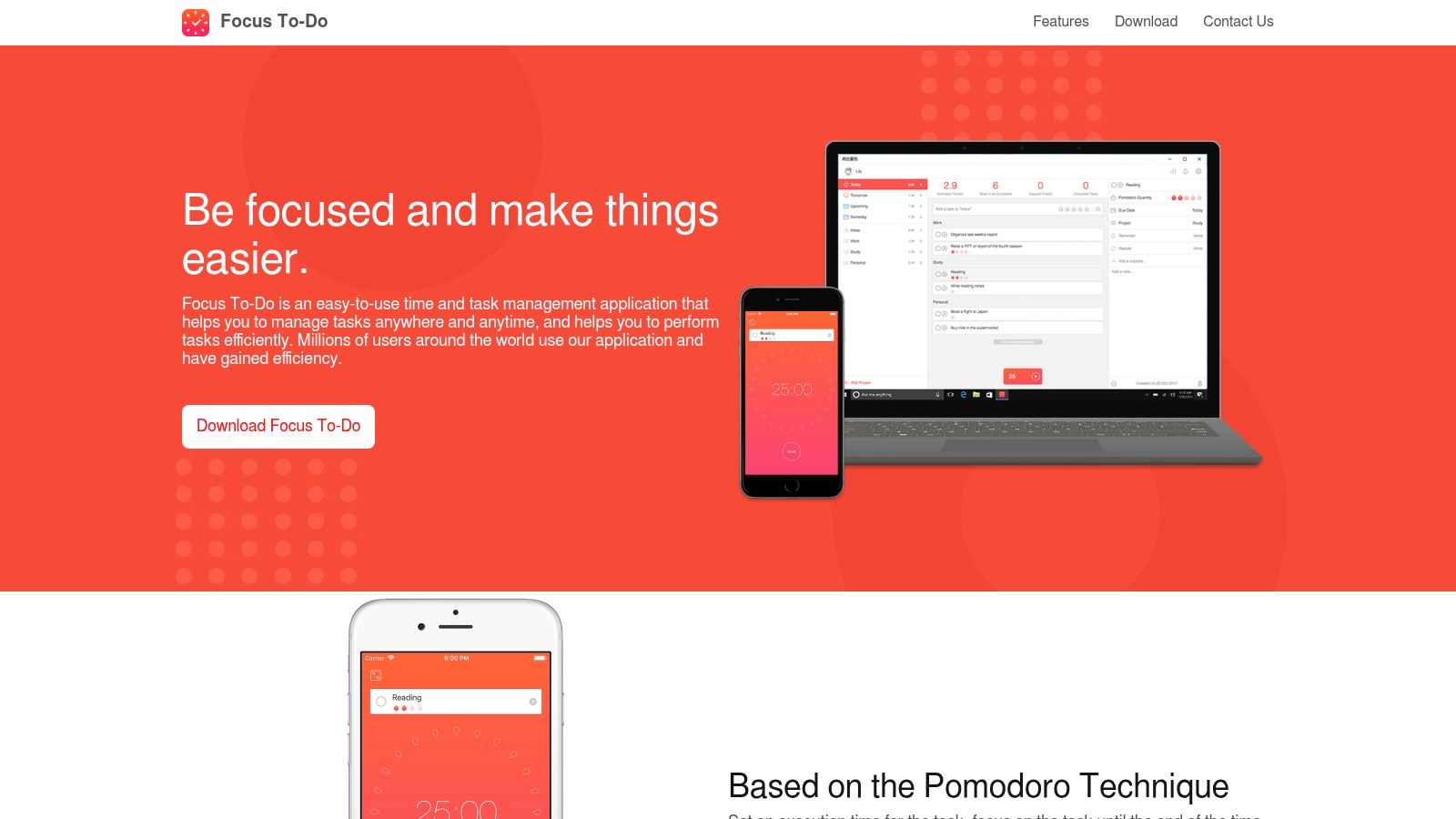
Focus To-Do is what I'd call a practical middle-ground app. It doesn't try to be as strict as a dedicated blocker, and it doesn't lean as heavily into social motivation as Flipd or Forest. Instead, it combines task management and Pomodoro timing in a way that's useful for ordinary coursework.
That's a strong fit for students whose main issue is turning a messy assignment list into discrete chunks. If your revision plan feels vague, attaching Pomodoro sessions directly to tasks is often enough to get traction.
Useful for planning-heavy study weeks
Focus To-Do works well for assignments that need sequencing.
- Tasks, priorities, and tags: Good for sorting reading, drafting, admin, and revision.
- Pomodoro-linked execution: Each task can become a clear work block instead of a broad intention.
- Cross-platform availability: Convenient if you switch between phone and desktop.
- Stats and reminders: Helpful if deadlines sneak up on you.
It also offers iOS app blocking during timers, which is a nice extra, but it still isn't a full-strength blocker-first tool. Think of it as a planning app with focus mechanics, not a digital fortress.
A lot of students don't need a harsher app. They need a smaller next step. Breaking “study biology” into three timed tasks beats staring at a huge subject and freezing.
The main caveats are usability and polish. Some users find the interface busy, and sync can feel inconsistent depending on how many devices you use. If you want something lightweight and fast to set up, though, Focus To-Do remains a solid option.
8. Brain.fm
A common study failure looks like this: the plan is clear, the laptop is open, the reading is in front of you, and your brain still refuses to settle. Brain.fm is built for that part of the system. Its job is audio support for sustained attention.
That makes it a different kind of tool from Freedom, Opal, or Cold Turkey Blocker. Those apps control access. Brain.fm changes the feel of the work session itself. In practice, I would only pick it first for students who can usually start, but lose concentration a few minutes in.
It works best in a stack, not as a standalone fix. Pair it with a blocker if you impulse-check apps. Pair it with Focusmate if starting is the bottleneck. Pair it with Kohru or Focus To-Do if your study sessions need clearer structure before the audio can help.
The appeal is simple. Open it, choose a focus or learning session, and press play. There is almost no setup cost, which matters during exam weeks when a complicated system often gets abandoned after a day or two. The ADHD-oriented options are also worth testing if generic lo-fi or ambient playlists fade into the background too fast.
Brain.fm also travels well. Offline listening and cross-platform access make it useful for library study, commute review, or any session where you do not want to fiddle with settings before getting started.
There are trade-offs.
Brain.fm does not enforce anything. If your pattern is compulsive switching, late-night scrolling, or opening YouTube every ten minutes, the app will not stop that behavior. It also asks you to decide whether paid focus audio is worth it when free music options exist. Some students notice a real difference. Others will get similar mileage from a playlist and a stricter blocker.
Recent reporting on University of British Columbia research also suggests some distraction-blocking tools can make neurodivergent users feel worse about themselves, which supports using lower-friction supports when shame is part of the problem, as described in this UBC news report on focus apps and neurodivergent users. Brain.fm fits that role better than punishment-first apps.
Use Brain.fm if attention quality is the weak point in your study workflow. Skip it if you need harder enforcement before anything else can work.
9. Focusmate
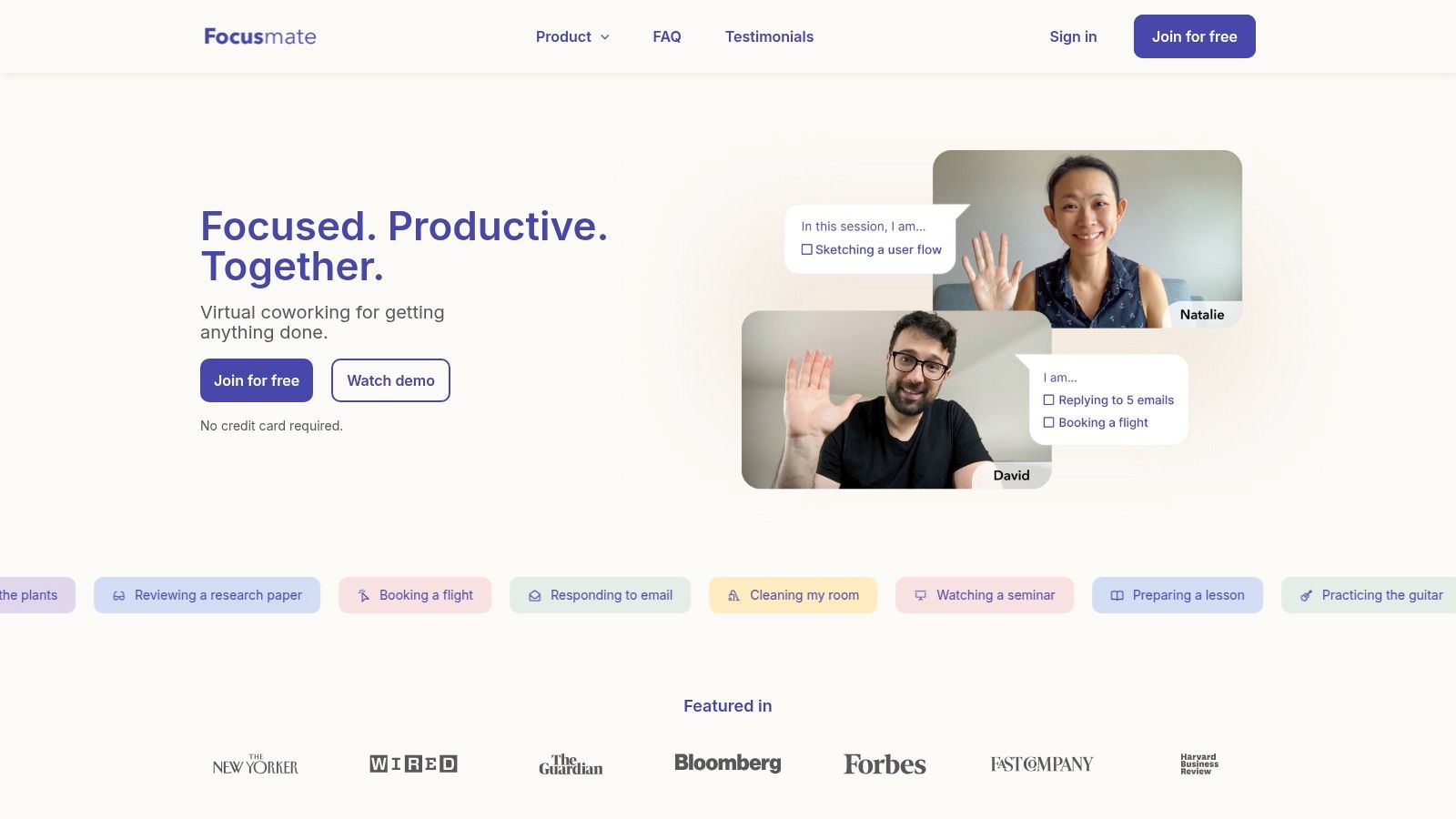
You planned a two-hour study block, opened your laptop, checked one message, and never fully began. Focusmate is built for that exact failure point. Its job in a study system is task initiation and accountability.
The app pairs you with another person for a timed virtual coworking session. At the start, each person says what they will do. Then both work, usually on camera, until the session ends and you check out. That structure sounds small. In practice, it creates a clean starting line, which is often the hardest part of studying.
I would not treat Focusmate as a complete focus app. I would treat it as a trigger.
Students who stall before they start often get more value from one booked Focusmate session than from another timer, planner, or motivational playlist. Once the session begins, the social expectation does part of the work for you. That makes it useful for ugly tasks: starting an essay, opening a problem set, doing readings you have already avoided for three days, or clearing admin work that keeps clogging your week.
Its limits are just as clear. Focusmate does not block YouTube, lock your phone, or organize your semester. If your problem is compulsive tab switching after you already sit down, Freedom, Opal, or Cold Turkey Blocker will do more. If your problem is deciding what to study, a planning tool such as Focus To-Do or an all-in-one workflow like Kohru makes more sense before you book the session.
The world fit looks like this:
- Use it for the first 25 to 50 minutes of a study block when starting is the bottleneck.
- Pair it with a blocker if you tend to drift during the session.
- Skip it if being on camera feels stressful enough to become another avoidance loop.
- Use repeat sessions if external accountability works better for you than self-set timers.
There is also some setup friction. You need a stable connection, a quiet enough space, and enough reliability to show up on time. That makes Focusmate less flexible than solo tools during commute study, library overflow noise, or chaotic exam weeks. Some students will find the live appointment format helpful because it creates commitment. Others will bounce off it fast.
Focusmate is strongest as one layer in a study stack. It handles starting and showing up. Let other apps handle blocking, planning, or audio.
10. SelfControl (macOS)
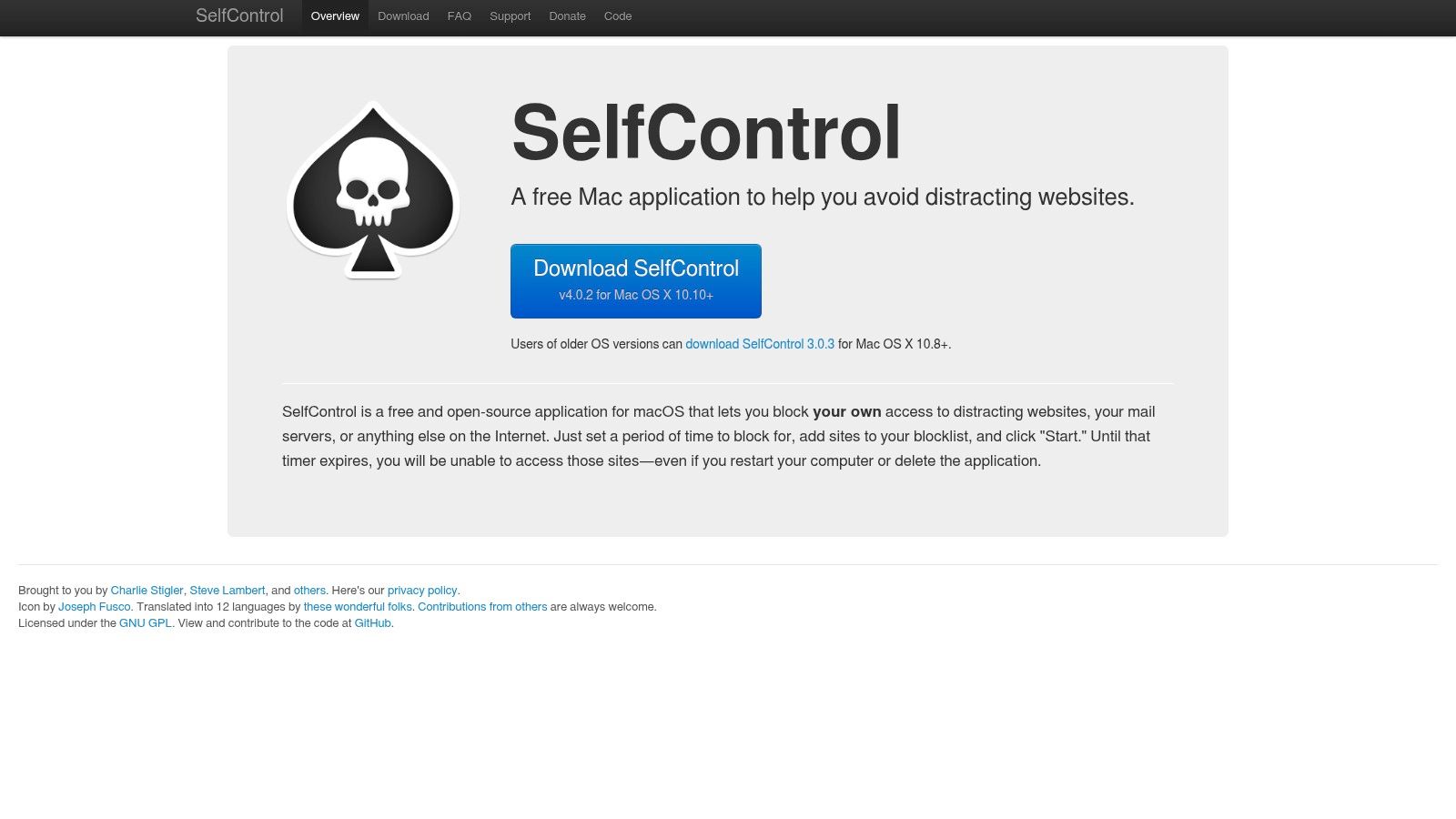
A common exam-week problem looks like this: the study plan is fine, the task is clear, but one reflexive trip to Reddit, YouTube, or a news site breaks the block. SelfControl solves that single problem on Mac with unusual force.
It belongs in the blocking layer of a study system, not the planning or accountability layer. You add a blacklist of sites, choose a duration, and start the timer. After that, those domains stay blocked until time expires, even if you restart the computer or regret the decision ten minutes later. That stubbornness is the whole point.
For the right student, it works better than prettier apps. A lot of blockers lose their value because they leave too many exits open or ask for too much setup. SelfControl is closer to a panic button for browser distraction. Open the app, paste the domains that usually wreck a study session, set the block, and get back to the paper or problem set.
The trade-off is obvious. SelfControl does one job.
It does not help you decide what to study, break work into sessions, track tasks, or control your phone. If your distractions jump between laptop and mobile, Freedom or Opal will cover more ground. If you want one place to combine planning, sessions, habit tracking, and blocking, Kohru fits that workflow better. If you already have a study plan and only need a hard Mac web block, SelfControl stays useful because it asks almost nothing from you.
There are also a few limits Mac users should know before relying on it. It blocks domains, not your entire device behavior, so offline procrastination is still available. It is also unforgiving if you block something you later need for legitimate work, which happens more often than students expect during research-heavy assignments. Setup is simple, but your blocklist needs a little thought. Include the obvious time sinks and leave room for tools you may need, such as Google Docs, your LMS, or reference sites.
SelfControl is still one of the cleanest answers to a narrow study bottleneck: "I know what I need to do. I just need these websites gone for the next two hours." On macOS, that is enough to earn it a place in a repeatable focus stack.
Top 10 Study Focus Apps, Feature Comparison
| Product | Core features | Blocking / Enforcement | Best for | Pricing & value |
|---|---|---|---|---|
| Kohru (Recommended) | One-click Focus Sessions, Smart To‑Do Lists, flexible habit tracking, calming dashboard | Cross-device blocking (phone + laptop + Chrome); customizable durations, difficulty modes, gentle enforcement | Students & professionals wanting science-backed, user-friendly deep work | Pricing not publicly listed; iOS available, Android coming soon |
| Forest | Gamified Pomodoro timer, co-planting, leaderboards, long-term stats | Light app-blocking via platform APIs; motivational rather than strict | Students who respond to gamification and visual streaks | Paid app with in‑app purchases / freemium model |
| Freedom | Multi-device app & website blocker, scheduling, Locked Mode, focus audio | Strong cross-platform sync (Mac/Win/iOS/Android/ChromeOS); Locked Mode for tougher sessions | Users who switch between laptop and phone and need robust scheduling | Subscription with clear plan comparison |
| Opal | Rule-based schedules, Hard Mode, allow-only lists, focus history | Strict hard-to-bypass blocks across mobile & desktop; Hard Mode enforces sessions | Users needing strong enforcement (e.g., exam season) | Subscription; lifetime purchase option available |
| Cold Turkey Blocker | Desktop website & app blocking, locking, schedules, granular allowances | Very strict desktop locks that are hard to circumvent (Windows/macOS only) | Power users who study mainly on desktops and want maximum enforcement | One-time license, good long-term value; student discount |
| Flipd | Timers with tags, calendars, milestones, community leaderboards | Optional companion Focus Lock; core app emphasizes accountability over heavy blocking | Students who prefer community events and group accountability | Freemium with premium subscription for full features |
| Focus To-Do | Tasks + Pomodoro integration, priorities, cross-platform apps, progress stats | Optional iOS app-blocking during timers; moderate enforcement | Users wanting integrated task management and timing in one app | Free + subscription; lifetime unlock option available |
| Brain.fm | Research-driven focus audio, task-specific modes, ADHD profiles, offline play | Not a blocker, audio complements timers and blockers to enhance focus | People who benefit from neuroscience-backed focus music (reading, coding) | Subscription-based; clear plans & cancellation |
| Focusmate | Live 1:1 virtual coworking, set goals/debrief, session lengths, favorites | No blocking, social accountability via live body-doubling | Users who need external accountability to start and sustain work | Freemium with paid plans for heavier use |
| SelfControl (macOS) | Open-source domain blacklist, simple timer, privacy-friendly | Unforgiving lockout on macOS until timer expires, cannot be bypassed | Mac users needing strict, no-nonsense focus windows | Free and open-source |
Build a Focus Stack You Can Repeat
The best focus apps for studying aren't the ones with the longest feature list. They're the ones that solve your actual bottleneck without creating a second problem you have to manage.
Choose Kohru if you want an integrated task-to-session workflow with cross-device blocking, flexible habit support, and a clear sense of progress. It's a good fit when your studying breaks down across several points at once. Planning the task, starting the work, protecting the session, and keeping the routine steady through the week. Instead of forcing you to assemble all of that manually, it puts those pieces in one system.
Choose a strict blocker if bypass resistance is your top priority. That usually means Cold Turkey Blocker on desktop, SelfControl on Mac, or Opal if your phone is the main issue. These tools work best when you already know what you should be doing and just need your environment to stop offering escape routes.
Choose Focusmate if your biggest problem is initiation. When the work starts late every day, accountability can matter more than blocking. A real appointment with another person often succeeds where private good intentions don't.
Choose Brain.fm if you don't need more rules. You need a better mental working environment. It's an add-on, not a replacement, but it can make deep reading, writing, and long solo sessions feel easier to sustain.
Choose Forest or Flipd if visible motivation helps you keep going. Forest is lighter and more game-like. Flipd is better for logging effort, community energy, and study history. Neither is the strictest option, but both can make consistency feel more tangible.
When you compare tools, use a short filter:
- Device compatibility: Do you need your phone, laptop, and browser covered together, or just one of them?
- Enforcement level: Do you need a gentle nudge, a hard lock, or something in between?
- Study format: Are you writing essays, reading dense material, revising with flashcards, or cramming for exams?
- Scheduling needs: Do you want recurring sessions or only manual starts?
- Setup friction: Will you configure advanced rules, or do you need something fast?
- Price transparency: Can you clearly tell what's free, what's paid, and what features sit behind the upgrade?
A workable study system is usually a stack, not a single app. One app plans the task. Another protects the session. A third may add accountability or audio. That isn't a flaw. It's often the most realistic response to how fragmented digital distraction is.
Keep the workflow simple enough to repeat. Define one study task. Schedule one distraction-free session. Block the apps and sites most likely to steal it. Take the break you intended to take. Review what you finished, then set the next session without turning your focus system into another procrastination project.
If an app makes you spend more time managing focus than studying, it's the wrong app.
If you want one tool that covers more of the study workflow in one place, Kohru is worth a close look. It combines task planning, cross-device focus sessions, flexible habit support, and progress tracking in a way that fits how students study now. See how it works at Kohru.
